
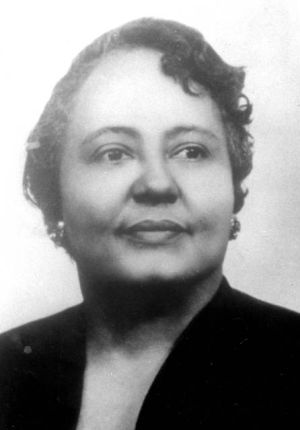
During the recent A.G. Gaston Conference, we paused to recognize someone whose name deserves far more attention in Birmingham’s history—Minnie Louise Gardner Gaston.
Most people know the story of A. G. Gaston, the entrepreneur who built businesses that created jobs and economic opportunity for Black families across the South.
But the Gaston legacy was never the work of one person alone.
It was a partnership.
Minnie Gardner was born into a large farming family in Lowndes County, Alabama, a family that believed deeply in education, discipline, and faith. Her family also had a personal connection to Booker T. Washington, whose philosophy of education and economic independence shaped an entire generation of Black leadership.
She later attended Tuskegee Institute, where Washington’s influence still guided the mission of preparing Black Americans not just for survival—but for ownership and leadership.
In 1939, Minnie Gardner married A.G. Gaston. That same year they co-founded the Booker T. Washington Business College in Birmingham. The name honored the educator Gaston admired and the leader Minnie’s family had known personally.
The purpose of the school was simple and powerful: prepare young people for real opportunity.
Thousands of students came through that college learning bookkeeping, typing, office management, and business skills that opened doors during a time when those doors were often closed to Black workers.
Minnie ran the school with a sense of mission. If a student couldn’t afford tuition, she often found a way to keep them enrolled anyway. She believed education was not simply a transaction—it was an investment in people.
But Minnie Gaston’s impact reached beyond Birmingham.
In the 1960s she traveled to Washington and testified before congressional committees, urging the federal government to provide financial aid for deserving students who wanted vocational and business training but could not afford it. Her advocacy helped lead to passage of the National Vocational Loan Insurance Act of 1965, expanding federally supported loans for vocational education students.
She was later appointed to a federal advisory council overseeing those student loan programs—an early step in the evolution of the federal student aid system that later expanded into programs such as Pell Grants.
At the same time, she helped establish Birmingham’s chapter of the National Council of Negro Women, the organization founded by Mary McLeod Bethune to promote leadership and advancement among Black women.
When people talk about the Gaston legacy, they often focus on business success.
But the deeper story is about building opportunity.
Minnie Louise Gardner Gaston helped educate thousands of students, advocated for federal student aid, and strengthened the institutions that supported Birmingham’s Black middle class.
She understood something that remains true today: opportunity does not happen by accident—it has to be built, protected, and passed on.
“Long before student aid became national policy, Minnie Gaston was already fighting to make sure deserving students had a pathway to education and economic independence.”
During Women’s History Month, it’s important that we remember her not simply as Mrs. Gaston—but as a builder of opportunity in her own right.